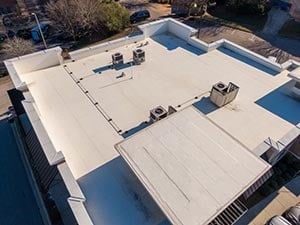
Single-ply roofing can be a practical option for a commercial building in Missoula, MT, but the membrane should be selected for the building rather than for a headline benefit. Substrate condition, drainage, insulation, attachment, rooftop traffic, detailing, service access, and repair compatibility all affect whether a system is a good fit. Flag Ship Foam & Coatings installs TPO, PVC, and EPDM single-ply systems for commercial, industrial, and agricultural properties. Call 208-946-3031 to discuss the roof.
Is Single-Ply Roofing a Good Fit for the Building?
| Factor | What to Confirm | Why It Matters |
|---|---|---|
| Substrate condition | Deck stability, moisture, deterioration, and preparation needs | Wet or damaged materials may need repair or removal before a membrane is installed. |
| Drainage | How water reaches drains, scuppers, or edges and where ponding occurs | A membrane does not correct blocked drainage, damaged insulation, or roof-geometry problems by itself. |
| Attachment | Deck type, wind exposure, roof height, and fastening or adhesion options | The attachment method should match the building and the selected roof assembly. |
| Insulation | Existing condition, moisture, thickness goals, and cover-board needs | Insulation affects thermal performance, attachment, and the finished assembly. |
| Rooftop activity | Equipment service, foot traffic, and recurring access routes | High-traffic areas may need walk pads or other protection against punctures. |
| Detailing | Curbs, penetrations, walls, drains, edges, and equipment | Complex roofs require careful system-specific flashing and seam work. |
| Service access | Whether seams and details can be reached for inspection and repair | Future maintenance should be considered before the membrane is selected. |
Flag Ship’s single-ply roofing guidance for Lolo provides additional context on building-use and maintenance considerations, while the final recommendation for a Missoula property should be based on its own roof conditions.
Compare TPO, PVC, and EPDM by Project Conditions
TPO, PVC, and EPDM are all single-ply membranes, but they are not interchangeable. TPO and PVC are thermoplastic systems commonly joined with heat-welded seams. EPDM uses different seam and repair methods. Material selection should account for exposure, roof configuration, rooftop activity, maintenance expectations, and compatibility with future repairs.
If TPO is being considered, Flag Ship’s TPO roofing information for Missoula provides supporting system context. The contractor should still explain why the proposed membrane fits the actual substrate, drainage, insulation, and building use rather than recommending a material solely because it is widely used.
Seam Quality Matters After the System Is Selected
Once the membrane type is chosen, seam workmanship becomes an important installation factor. For thermoplastic membranes, heat-welded seams depend on proper surface preparation, suitable equipment settings, correct overlap, and field conditions. The contractor should follow the membrane manufacturer’s installation requirements and verify completed seams using the appropriate quality-control method for that system.
Seam performance should not be treated as the only measure of roof quality. Flashing, attachment, penetrations, drainage, edges, substrate preparation, and transitions around equipment also affect whether the roof performs as intended.
Preparation and Field Conditions Affect Welding

Thermoplastic seam areas should be prepared according to the membrane manufacturer’s requirements before welding. Surface condition, contamination, moisture, ambient temperature, wind, and equipment settings can all affect the welding process.
Instead of relying on a single universal temperature or speed, ask how the crew will adjust its process for the specific membrane and field conditions. The installer should also explain what checks are performed during the work so inadequate seams can be corrected before the roof is closed out.
Repair Compatibility Should Be Planned From the Start
Future repairs should use methods and materials compatible with the membrane that is actually installed. TPO, PVC, and EPDM repairs are not performed the same way, so a generic patch should not be assumed to work across systems.
Owners should keep product information and roof records so future service crews can identify the membrane and use an appropriate repair method. If the roof later develops a puncture, seam issue, flashing defect, or leak, Flag Ship’s flat roof repair information for Missoula provides related guidance on diagnosing the condition before choosing a repair scope.
Ask What the Contractor Will Confirm Before Installation
- Existing conditions: What was inspected, and are moisture or deck concerns still unresolved?
- Membrane selection: Why does the proposed TPO, PVC, or EPDM system fit this building?
- Attachment: What attachment method is planned, and what building conditions support that choice?
- Drainage: Are ponding or slope problems being corrected as part of the project?
- Insulation: What insulation or cover-board work is included, and how were those needs determined?
- Seam and flashing QA: How will seams, penetrations, edges, and flashing details be checked?
- Future repairs: What records will identify the membrane and compatible repair method later?
Single-Ply Roofing in Missoula, MT
A well-chosen single-ply roof starts with building conditions, not a generic list of benefits. Substrate condition, drainage, attachment, insulation, rooftop traffic, detailing, service access, and repair compatibility should be reviewed before the membrane is selected. After that, installation quality, including seams and flashing, determines whether the chosen system is executed correctly. Flag Ship Foam & Coatings can evaluate single-ply roofing options for Missoula commercial properties. Call 208-946-3031 to discuss the roof.
Frequently Asked Questions
Are TPO, PVC, and EPDM repaired the same way?
No. Repair materials and seam methods depend on the membrane, so the existing system should be identified before a repair is selected.
Does single-ply roofing fix ponding-water problems?
Not by itself. The cause of ponding should be identified, and drainage or insulation corrections may need to be included in the project.
What should an owner ask about seam quality?
Ask which manufacturer requirements apply, how field conditions affect welding, and what quality-control checks will be used before closeout.
How long does a single-ply roof last in Montana?
Service life varies with membrane type, assembly design, installation, exposure, traffic, drainage, and maintenance, so use system-specific project information rather than one universal figure.