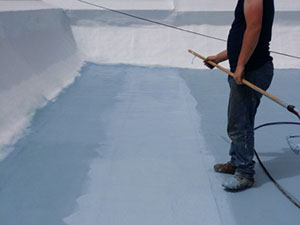
Metal Roof Belgrade, MT

A metal roof is one of the most durable commercial roofing options available, but durability is not the same as invincibility. Montana’s climate tests every material on a building, and metal roofing is not exempt. At Flag Ship Foam & Coatings, we restore and protect commercial metal roofs across Montana, and we see the same weather-driven failure patterns repeat on buildings that were never treated after installation. Call us at 208-946-3031 to find out where your metal roof stands.

Belgrade sits in the Gallatin Valley, where commercial and agricultural buildings deal with a full range of punishing conditions. Chinook wind events bring rapid temperature swings in winter. Summers are hot and dry with high UV intensity. Snow loads in a hard winter put real mechanical stress on roof panels and fasteners. An uncoated metal roof absorbs all of that without protection.

Metal Roof Performance Under Extreme Weather Conditions

An uncoated metal roof starts losing performance from the day it is installed. The degradation is slow at first, but Montana’s climate accelerates it in ways that are not always visible from the ground. Surface oxidation, fastener fatigue, and coating breakdown each follow their own timeline, and they often converge around the same point in a roof’s life.

The performance limits of an uncoated metal roof show up in predictable ways: active leaks at fastener points, rust staining along seams, and oil-canning panels fatigued from years of thermal movement. By the time those signs appear, the damage has been developing for seasons. Catching the process earlier extends the roof’s life and avoids replacement.

What Montana’s Temperature Swings Do to a Metal Roof

blank

Metal expands in heat and contracts in cold. On a large commercial or agricultural roof in the Gallatin Valley, that movement is significant across the full length of every panel. A Chinook event in January can push temperatures from below zero to above 50 degrees Fahrenheit within hours. The metal roof moves with that swing, and every fastener, seam, and penetration takes the stress of that movement.

Over years of Montana temperature cycling, that movement fatigues panel connections and the structure beneath them. Fastener holes elongate as panels shift. Sealant at laps and penetrations cracks and loses its bond. The roof develops micro-pathways that water finds during the next rain event, and those pathways widen if nothing seals them.

How UV and Moisture Work Against an Uncoated Metal Roof

Montana’s elevation means higher UV intensity than most building owners account for. UV radiation breaks down the protective coating on painted metal panels faster at altitude. Once the factory finish starts chalking and fading, the bare metal beneath is exposed to direct oxidation. Rust does not start on the surface. It starts where the coating has thinned or cracked, typically along panel edges, fastener heads, and cut ends.

Moisture compounds the UV damage. Morning condensation, snowmelt, and rain keep the surface wet repeatedly all year. On a roof where the coating has degraded, moisture accelerates oxidation significantly. High UV plus repeated moisture exposure is what moves a metal roof from cosmetic rust to structural rust faster in Montana than in lower-elevation environments.

The Fastener Problem Nobody Talks About

Galvanic corrosion at fastener points is the failure mode most building owners never see coming. The steel panel above looks fine. The fastener itself, exposed to trapped moisture at the panel interface, corrodes from the inside out. The first sign is a rust stain running down the panel below the fastener head, by which point the corrosion is already well advanced.

A large commercial metal roof in Belgrade has hundreds or thousands of fastener points, each a potential failure location. A Conklin MR System restoration encapsulates the entire fastener field under a seamless, fully adhered coating that cuts off the moisture driving galvanic corrosion. It is the step conventional paint programs miss entirely.

Protect Your Metal Roof

Every metal roof has a performance window, and Montana’s climate shortens it for buildings that were never treated after installation. At Flag Ship Foam & Coatings, we restore commercial and agricultural metal roofs across Belgrade, MT using Conklin MR Systems built to stop the weathering process and extend roof life by decades. Call us at 208-946-3031 to schedule a free inspection and find out what your metal roof actually needs.

FAQ

How long does a metal roof last in Montana?
An uncoated metal roof typically lasts 20 to 30 years in Montana. A properly restored and coated system can extend that by 15 to 20 years beyond the original lifespan.

Does a metal roof need maintenance in cold climates?
Yes. Freeze-thaw cycling, fastener fatigue, and UV degradation all require periodic inspection and treatment to prevent early failure in cold, high-elevation climates like Montana.

What causes rust on a commercial metal roof?
UV breakdown of the factory coating exposes bare metal, and repeated moisture contact then accelerates oxidation at those unprotected areas, particularly around fasteners and panel edges.

Can a damaged metal roof be restored instead of replaced?
Yes. As long as the structural integrity of the deck and panels is sound, a Conklin MR System restoration can seal, waterproof, and extend the roof’s service life without a full replacement.

Commercial Roofing Companies Belgrade, MT

blankMost property owners in Belgrade, MT, think of commercial roofing companies as contractors for office buildings and retail strips. But in Gallatin County, the buildings that take the hardest beating are often agricultural and industrial, and those structures deserve the same level of roofing expertise.

At Flag Ship Foam & Coatings, we work on commercial, agricultural, and industrial buildings across Montana. Call us at 208-946-3031 to talk through what your building actually needs.

This article covers why farm and ranch owners in Montana are better served by a qualified commercial roofing company than a general contractor, what that difference looks like in practice, and why the assumption that agricultural buildings need a simpler roofing approach tends to cost more in the long run.

What Montana Farm Owners Get Wrong About Commercial Roofing Companies

Agricultural buildings in Montana are not simpler roofing jobs. They are just different ones. A large pole barn or grain storage facility often has more square footage than a mid-size commercial office building, with long unbroken roof planes that collect snow loads, wide eaves that collect ice, and metal substrates that expand and contract aggressively through the freeze-thaw cycle.

General contractors who dabble in roofing tend to treat these structures as a nail-down-metal job and move on. The result is exposed fasteners that fail within a few seasons, no waterproof membrane, and no attention to the details at transitions and penetrations where water actually gets in. A commercial roofing company that works on industrial and agricultural buildings brings a system-level approach: the right substrate prep, the right products, and real warranty coverage.

Commercial Roofing Systems Work on Agricultural Buildings

Commercial roofing systems, especially foam and coating systems, are built to perform on large, low-slope surfaces in demanding climates. That description fits Montana agricultural buildings exactly. A Conklin foam and coating system, for example, creates a seamless, fully adhered surface across the entire roof plane with no exposed fasteners and no seams to fail. On a 60-by-120-foot equipment barn outside Belgrade, that is the difference between a roof that stays dry through a hard Montana winter and one that leaks at every screw point.

Metal restoration systems work the same way on existing metal roofs. Rather than tearing off an aging barn roof and starting over, a Conklin MR system is applied directly over the existing metal surface, stopping leaks and sealing rust without the cost and disruption of a full replacement. For a working ranch or farm operation, keeping the building functional during the process matters as much as the finished result.

blankCommercial Roofing Companies on Industrial Buildings

Industrial facilities have their own set of challenges. Processing plants, cold storage buildings, and equipment shops often have roofs with multiple penetrations, exhaust vents, and equipment curbs that create detailing complexity a general roofing crew is not prepared for. Moisture at any one of those penetrations can compromise insulation, corrode structural steel, and damage inventory.

A commercial roofing company that regularly works on industrial buildings handles that complexity. Spray foam is particularly effective here because it conforms to irregular surfaces, wraps around curbs and penetrations, and adds insulation value at the same time.

What to Ask Commercial Roofing Companies Before You Hire

Not every commercial roofing company does agricultural and industrial work well. Ask directly. A few questions worth raising before anyone gets on the roof:

  • Do you work on metal roofs, and do you use a manufacturer-certified restoration system?
  • Can the project be done without shutting down operations inside the building?
  • Does the system come with a manufacturer warranty, not just a workmanship guarantee?
  • Have you worked on buildings this size in Montana’s climate?

These questions weed out contractors who treat your barn like a residential re-roof. A company that works regularly on agricultural and industrial buildings answers all of them without hesitation.

Commercial Roofing Companies Are More Versatile Than You Think

Agricultural and industrial buildings in Belgrade, MT, deserve the same quality roofing work that commercial properties get, and the right commercial roofing company brings exactly that. At Flag Ship Foam & Coatings, we use Conklin systems on farms, ranches, and industrial facilities across Montana because those products hold up where generic roofing materials do not. Call us at 208-946-3031 and let us take a look at what your building needs.

FAQ

Can a commercial roofing company handle a pole barn roof?
Yes, pole barns are one of the most common agricultural structures we work on, and foam and coating systems are well-suited to their large, low-slope metal surfaces.

Does spray foam roofing work on grain storage buildings?
Spray foam works well on grain storage because it seals irregularities and penetrations fully, which is where most moisture problems start on those buildings.

How long does a Conklin metal restoration system last on a Montana barn?
Properly applied, a Conklin MR system typically carries a 10-year renewable warranty, and many roofs see significantly longer service life with a recoat at the end of the warranty period.

Is it possible to restore an agricultural roof in winter in Montana?
Most coating and foam applications require temperatures above 40 degrees Fahrenheit, so late spring through early fall is the practical window for most agricultural roofing work in this region.

Foam Insulation Missoula, MT

Foam Insulation Missoula, MT 1

Commercial buildings in Missoula lose more heat than most owners realize, and the culprit is usually not the insulation material itself. It is the air. At Flag Ship Foam & Coatings, we install foam insulation systems for commercial and industrial buildings across Montana that seal those leaks completely. Call us at 208-946-3031 to schedule a free inspection and find out how much your building is actually losing.

Foam Insulation: Save the Heat

Montana winters are long, cold, and unforgiving on any building that is not properly sealed. Most commercial properties have fiberglass batts or loose-fill insulation in the walls and ceiling. Those materials slow heat transfer, but they do nothing to stop air movement. That gap between thermal resistance and true air sealing is where Montana buildings bleed heat every winter and lose cooled air every summer.

Fiberglass insulation has a rated R-value, but that number assumes a perfectly sealed, zero-airflow cavity. Real commercial buildings are not that. Wall penetrations, framing gaps, electrical boxes, and mechanical openings all create pathways for air to bypass the insulation entirely. In Missoula, where heating season runs from October through April and overnight temperatures drop well below zero, those leaks add up to serious energy loss that the insulation does nothing to stop.

Spray polyurethane foam is the only insulation product that addresses air infiltration and thermal resistance at the same time. When SPF is applied, it expands to fill the cavity and bonds to the surrounding substrate, sealing every gap it contacts. There is no seam, no gap, and no airflow path left behind. That dual function is what makes foam insulation perform at its rated R-value in the real world, not just in a lab test.

Where Insulation Stops Heat Loss That Other Products Miss

Foam Insulation Missoula, MT 2

Most commercial building owners think of insulation as something that goes on the walls. That is part of it. But the worst air leakage in a typical commercial building happens at roof penetrations, around HVAC equipment, and at parapet walls where the envelope transitions between materials. Those are exactly the spots where fiberglass batts cannot be installed properly and where board insulation leaves gaps. Spray foam follows the geometry of the structure and fills what it touches.

For Montana commercial buildings, the roof assembly is especially critical. Heat rises. A poorly insulated or air-leaky roof plane is working against every dollar spent on the heating system. Spray foam applied to the underside of a roof deck or within a roof assembly creates a continuous thermal and air barrier that stops heat loss at the top of the building, where it matters most during a Missoula winter.

Foam Insulation Works Across the Building Envelope

One of the practical advantages of SPF is that it bonds to almost any commercial substrate. Metal buildings, concrete block, wood framing, existing insulation assemblies, rooftop decks, and interior wall cavities all accept spray foam application without specialized prep work. That versatility matters for older commercial properties in Missoula where the building envelope may be a mix of different construction materials and vintages.

Spray foam insulation can be applied in the following locations on a commercial building:

  • Roof deck undersides and above-deck applications on flat and low-slope roofs
  • Interior wall cavities during renovation or new construction framing
  • Metal building wall panels where air infiltration at seams and fasteners is common
  • Mechanical rooms, crawl spaces, and conditioned storage areas
  • Rim joist and foundation transitions where air leakage is often overlooked

Foam Insulation Specialists

The energy savings are real and they start immediately. Heating loads drop when air infiltration is removed from the equation. Cooling loads follow in summer. Beyond energy performance, a properly foam-insulated commercial building has better moisture control, since closed-cell SPF does not absorb water and prevents condensation at the building envelope. That matters in Montana, where freeze-thaw cycles can drive moisture into wall and roof assemblies and cause long-term structural damage.

Flag Ship Foam & Coatings has been installing spray foam systems across Montana for nearly two decades. We work on commercial, industrial, and agricultural buildings throughout the region using proven SPF products that perform in this climate. Call us at 208-946-3031 and let us take a look at where your building is losing heat and what foam insulation can do about it.

FAQ

Is spray foam insulation suitable for existing commercial buildings or only new construction?
SPF can be installed in existing buildings without major demolition, making it a practical retrofit option for occupied commercial properties.

Does closed-cell foam insulation also act as a vapor barrier?
Yes, closed-cell SPF has a very low vapor permeance and functions as both a thermal and vapor barrier in a single application.

How does foam insulation hold up in Montana’s freeze-thaw cycle?
Closed-cell SPF does not absorb water and remains dimensionally stable through repeated freeze-thaw cycles, which is a key reason it performs well in Montana’s climate.

Can spray foam be applied over existing insulation in a commercial wall or ceiling?
In many cases yes, provided the existing insulation is dry and the substrate is sound, though a site inspection is needed to confirm compatibility.

TPO Restoration Moscow, ID

TPO Restoration Moscow, ID 1

Commercial property owners in Moscow, ID managing aging TPO roofing systems frequently face the same question: repair, restore, or replace? Full membrane replacement is the most expensive path and not always the necessary one. TPO restoration offers a cost-effective middle ground that can extend roof service life significantly, but it is not the right solution for every roof.

The experts at Flag Ship Foam & Coatings are here to help you maximize your TPO roofing investment. Call 208-946-3031 today to schedule your consultation.

Is Your Roof a Candidate for TPO Restoration?

Understanding what makes a TPO roof a strong restoration candidate, and what disqualifies one, helps property owners make informed decisions before committing to either path.

TPO restoration is a process of renewing an existing thermoplastic polyolefin membrane through surface preparation, targeted repairs, and application of a compatible fluid-applied coating system. Unlike replacement, restoration preserves the existing membrane as the foundation of the renewed system rather than tearing it off and starting over. The coating bonds to the cleaned and prepared TPO surface, sealing existing vulnerabilities, restoring reflectivity, and providing a new waterproofing layer backed by a manufacturer warranty. The result is a roof that performs comparably to a new installation at a substantially lower cost.

Signs Your TPO Roof May Be a Good Restoration Candidate

Surface Chalking and Faded Reflectivity

TPO membranes are valued in part for their white reflective surface, which reduces solar heat absorption and lowers cooling loads. Over time, UV exposure causes the surface to chalk and lose reflectivity. A roof showing significant surface chalking, but otherwise sound membrane integrity is often an ideal restoration candidate, because the coating system restores reflective performance while also renewing the waterproofing layer.

Minor Seam Lifting and Edge Separation

Seam and termination issues are among the most common TPO deficiencies and are addressable within a restoration scope when they are isolated rather than widespread. Lifted seam edges and minor termination separations can be repaired with compatible TPO tape and adhesive during the surface preparation phase, before the coating is applied. A roof with localized seam issues and otherwise sound membrane condition is a strong candidate for restoration rather than replacement.

Surface Punctures and Minor Membrane Damage

Small punctures from foot traffic, hail impacts, or rooftop equipment contact are repairable within a restoration scope provided the underlying insulation has not been compromised by moisture intrusion. A qualified contractor will probe suspect areas during the inspection phase to confirm the insulation remains dry before proceeding. Isolated punctures on a roof with sound substrate conditions do not disqualify a restoration candidate.

Age Within the Restorable Window

TPO membranes are typically restorable when they retain sufficient thickness and structural integrity to accept and support a coating system. Most TPO roofs are strong restoration candidates between roughly 10 and 20 years of age, depending on installation quality, maintenance history, and exposure conditions. A membrane that has been maintained and inspected regularly is more likely to fall within the restorable window than one that has been neglected for an extended period.

TPO Restoration Moscow, ID 2

What Disqualifies a TPO Roof from Restoration

Not every TPO roof is a viable restoration candidate, and a thorough inspection is the only reliable way to determine which category a specific roof falls into. Several conditions push a roof toward replacement rather than restoration.

Widespread moisture infiltration into the insulation layer is the most common disqualifying condition. When moisture has saturated insulation across a significant portion of the roof, the wet material must be removed and replaced before any new system is installed. If the affected area is large enough, the scope and cost of that remediation narrows the financial gap between restoration and full replacement considerably.

Membrane shrinkage that has placed tension on flashings and terminations across the entire roof is another disqualifying factor. Localized shrinkage can be managed within a restoration scope, but systemic shrinkage indicates the membrane has reached the end of its useful life and will continue pulling away from perimeter details regardless of what coating is applied over it.

Severely degraded membrane thickness, where UV exposure and weathering have reduced the TPO to a point where it can no longer provide a stable bonding surface, also moves the decision toward replacement. A coating applied to a membrane that is structurally compromised will not perform as designed and will not qualify for manufacturer warranty coverage.

TPO Restoration Professionals

Flag Ship Foam & Coatings provides TPO roof restoration and replacement services throughout Moscow, ID and the surrounding region. Their inspection process is thorough, their assessments are honest, and their restoration work is backed by manufacturer warranty coverage on qualifying roofs. If your commercial TPO roof is showing signs of age or recurring problems, contact Flag Ship Foam & Coatings at 208-946-3031  to schedule an assessment and find out whether restoration is the right path forward for your building.

FAQ

How long does a TPO restoration last?
A properly executed TPO restoration backed by a quality coating system typically carries a manufacturer warranty of 10 to 20 years depending on the system selected and the coating thickness applied. Roofs that receive regular maintenance and inspection after restoration consistently perform at the higher end of that range.

How does TPO restoration compare to full replacement on cost?
Restoration typically costs between 40 and 60 percent of full TPO replacement depending on roof size, condition, and the coating system applied. When the insulation is dry and the membrane retains sufficient integrity, restoration delivers comparable performance and warranty protection at a significantly lower investment, making it the preferred option for most qualifying roofs.

Metal Roof Restoration Moscow, ID

Metal Roof Restoration Moscow, ID 1

Commercial property owners in Moscow, ID facing an aging or deteriorating metal roof often assume replacement is the only path forward. That assumption carries a significant price tag. Metal roof restoration is a proven alternative that addresses the most common causes of metal roof failure at a fraction of replacement cost, while delivering performance improvements and extended service life that make the financial case difficult to ignore.

For property owners evaluating their options, understanding what restoration actually delivers is the right place to start. Contact Flag Ship Foam & Coatings at 208-946-3031 and learn more ways to get the most from your investment.

Metal Roof Restoration Delivers Better ROI

Metal roof restoration is not a cosmetic fix. It is a systematic process that addresses the underlying conditions driving roof deterioration before applying a protective coating system that seals, waterproofs, and reinforces the existing metal substrate. The process typically begins with a thorough inspection to assess the roof’s suitability for restoration, followed by cleaning, rust treatment, fastener and seam repair, and application of a compatible coating system. The result is a roof that performs significantly better than it did before treatment and carries a new warranty on the restored system.

Energy Efficiency Gains

One of the less obvious but financially significant benefits of metal roof restoration is the improvement in building energy performance. Restoration coating systems are formulated with reflective pigments that reduce solar heat absorption, lowering rooftop surface temperatures and reducing the cooling load on the building during summer months. In a region like Moscow where summer UV intensity is considerable, the energy savings from a reflective coating system contribute meaningfully to the restoration’s total return over time. Some coating systems also qualify for energy efficiency incentives that partially offset the restoration investment.

Extended Service Life

A properly executed metal roof restoration extends the functional service life of the existing roof by 10 to 20 years depending on the coating system applied and the maintenance program that follows. This extension defers the capital expense of full replacement, which on a large commercial building represents a significant budget item. Property owners who restore rather than replace gain additional years to plan for eventual replacement, accumulate reserves, and time the project on their own terms rather than in response to an emergency failure.

The warranty that accompanies a quality restoration system provides additional financial protection. Flag Ship Foam & Coatings applies coating systems backed by manufacturer warranties that cover the restored roof for the duration of the warranty period, giving property owners documented assurance of performance rather than simply a contractor’s word.

Metal Roof Restoration Moscow ID

When Restoration Is the Right Call

Not every metal roof is a restoration candidate. Roofs with severe structural deterioration, widespread substrate damage, or metal panels that have corroded beyond the point where a coating can adhere properly may require replacement regardless of the cost differential. This is why a thorough inspection is the essential first step before any restoration commitment is made. A qualified contractor will assess fastener condition, panel integrity, existing coating adhesion, and the degree of rust penetration to determine whether restoration is a viable and durable solution for the specific roof in question.

In most cases involving commercial metal roofs that have experienced moderate weathering, surface rust, minor seam separation, and fastener backing, restoration is not only viable but clearly preferable on a cost and performance basis.

Metal Roof Restoration Specialists

Flag Ship Foam & Coatings provides commercial metal roof restoration services throughout Moscow, ID and the surrounding region. Their team conducts thorough pre-restoration inspections, prepares surfaces to manufacturer standards, and applies coating systems backed by warranty coverage that protects the property owner’s investment. If your commercial metal roof shows signs of age, rust, or recurring leaks, contact Flag Ship Foam & Coatings at 208-946-3031  to find out whether restoration is the right solution for your building.

FAQ

How long does a metal roof restoration take compared to full replacement?
Restoration is typically completed significantly faster than replacement. Most commercial restoration projects are finished in days rather than weeks, with far less disruption to building operations and tenants than a full tear-off and reinstallation would require.

Can a restored metal roof be restored again in the future?
Yes. One of the advantages of a coating-based restoration system is that the roof can be recoated at the end of the warranty period, extending service life again without requiring tear-off. This makes restoration a long-term maintenance strategy rather than a one-time fix.

What maintenance does a restored metal roof require?
Restored metal roofs benefit from the same twice-annual inspection program recommended for other commercial roofing systems. Keeping drains clear, addressing any coating damage from foot traffic or debris promptly, and scheduling recoating within the manufacturer’s recommended timeframe are the primary maintenance responsibilities after a restoration is completed.

Single-Ply Roofing Missoula, MT

Single-Ply Roofing Missoula, MT 1

Single-ply roofing performance often comes down to one critical detail: the seam weld. Even when the rest of the installation is done correctly, poorly welded seams can lead to premature failure. On commercial buildings in Missoula, MT, proper seam work is what ensures the system remains watertight and performs as intended over time.

Flag Ship Foam & Coatings installs single-ply membrane roofing systems for commercial, industrial, and agricultural properties in Missoula, MT. Call 208-946-3031 to see the standard of workmanship your roofing system should meet.

Seam Weld Defines Single-Ply Roofing Performance

A single-ply membrane system covers a commercial or industrial roof in large sheets. Those sheets are not one continuous piece. They are individual rolls of membrane material that overlap at defined widths and get joined together with heat. The resulting weld is where two separate pieces of membrane become one continuous waterproof surface. When that weld is done correctly, the bond at the seam is actually stronger than the membrane material on either side of it. When it is done poorly, the seam is the weakest point on the entire roof.

In Montana’s climate, that distinction matters enormously. Every degree of thermal movement the roof experiences travels through the membrane and concentrates at every seam line. A weld with insufficient fusion, inconsistent width, or voids along its length will respond to that thermal stress by separating. Not immediately, and not visibly from the surface. But progressively, over the first few seasons, until moisture finds its way into the gap.

This is why the seam weld is not a finishing detail. It is the core performance question for any single-ply roofing installation in Missoula, Montana, and it is the first thing an informed building owner should ask about before work begins.

Preparation is Key

Single-Ply Roofing Missoula, MT 2

Membrane surface preparation is the first requirement. Both sheets must be clean and dry at the seam area before the welder makes contact. Dust, debris, surface contamination, or any moisture at the weld zone prevents proper fusion. On a Montana commercial roof where dust is a constant presence and weather windows can shift quickly, this preparation step is easy to rush and costly to rush.

Equipment calibration is the second requirement. Hot air welders used on single-ply seams operate at specific temperature settings that vary based on the membrane material being welded, the ambient temperature on the roof, and the wind conditions during installation. A welder set too cool produces an under-fused seam that looks sealed but has not bonded fully through the membrane thickness. A welder set too hot damages the membrane and creates a brittle bond that cracks under thermal movement. Calibrated equipment and a crew that understands how to adjust settings for field conditions is not optional on a quality single-ply installation.

No Short-cuts

A contractor who moves too quickly through seaming, welds in marginal temperature conditions without adjusting settings, or skips the probing step that verifies weld quality produces a roof that fails progressively.

The most common shortcut is speed. Seaming takes time on a large commercial or agricultural roof in Montana. Running the welder faster than the membrane requires to achieve full fusion is a way to finish the day’s work on schedule. The result is a seam with surface fusion and insufficient depth of bond. Under the thermal cycling that a Montana roof experiences through its first full year, those seams begin to show edge separation at the weld line. Water follows.

Welding in temperatures outside the membrane manufacturer’s specified range is the second common shortcut. Most single-ply membranes have installation temperature minimums. In Montana, fall installation windows can push against those limits as temperatures drop. A contractor who continues welding below the minimum temperature threshold rather than rescheduling produces seams that have not fused properly. Montana’s winters will find every one of those substandard bonds within the first season.

Single-Ply Roofing Specialists

There is no middle ground on single-ply roofing seam performance in Missoula, Montana’s climate. A properly welded seam holds through decades of Montana winters, heavy snow loads, and summer thermal cycling. A shortcut weld fails, and it fails where it matters most: at the waterproofing line that the entire system depends on.

At Flag Ship Foam & Coatings, we install single-ply membrane systems throughout Missoula, Montana with a focus on the details that determine whether a weld holds. Call 208-946-3031 and let us show you what a proper single-ply installation looks like from the weld out.

FAQ

How wide should a properly welded single-ply seam be on a commercial roof?
A minimum of one and a half inches of fused seam width is the standard for most single-ply membrane systems, with two inches preferred on commercial installations in high-wind or high-snow-load regions.

Can single-ply roofing be installed on agricultural buildings with wide spans in Montana?
Yes, single-ply membrane systems are well suited to large-span agricultural structures and are commonly used on grain storage, equipment barns, and processing facilities across Montana.

What is the difference between TPO and PVC single-ply membranes for Montana commercial roofs?
Both are heat-welded thermoplastic membranes with strong seam performance, but PVC offers superior chemical resistance for agricultural and industrial facilities where rooftop exposure to oils or chemicals is a factor.

How long does a properly installed single-ply roof last in Montana’s climate?
A properly installed and maintained single-ply membrane system on a commercial or industrial building in Montana typically delivers 20 to 30 years of service life depending on membrane thickness and attachment method.

Commercial Roofing Contractor Missoula, MT

Commercial Roofing Contractor Missoula, MT 1

Choosing the wrong commercial roofing contractor can be one of the most costly mistakes a building owner makes. In markets like Missoula, MT, options range from experienced specialists to general contractors and out-of-state crews, making it important to understand who is actually qualified to handle commercial roofing work. Asking the right questions before a project begins helps ensure quality results and long-term performance.

Flag Ship Foam & Coatings works with commercial, industrial, and agricultural properties in Missoula, MT. Call 208-946-3031 to have a clear, informed pre-project conversation and choose the right contractor for your building.

Choosing a Commercial Roofing Contractor

A qualified commercial roofing contractor starts the relationship with an honest assessment of the building’s roof condition. Not a sales conversation. Not a pitch for the most expensive system in their portfolio. An honest evaluation of what is actually happening on the roof, what the options are based on the membrane type, the deck condition, and the building’s age and use, and what the contractor recommends and why.

For commercial and agricultural buildings in Montana, that assessment should include a physical inspection of the roof surface, flashing conditions, penetration details, drainage performance, and any areas showing evidence of existing moisture infiltration. A contractor who provides a replacement or restoration estimate without getting on the roof is providing a guess, not an assessment.

The assessment conversation should also cover what is realistic for the building’s situation. If the existing membrane has enough structural integrity to support a restoration system, that option deserves an honest presentation alongside replacement. If the deck has damage that must be addressed regardless of what goes on top of it, the building owner needs to know that before the contract is signed, not after the tear-off reveals it mid-project.

Written Project Scope

Commercial Roofing Contractor Missoula, MT 2

A qualified commercial roofing contractor in Missoula provides a written scope of work before any contract is executed, and that document should be specific enough to hold both parties accountable. A complete written scope covers the following:

  • The specific area of the roof being addressed, identified by section or square footage rather than a general description
  • The existing membrane system being worked on or removed, identified by type and approximate age where known
  • The materials being installed, specified by manufacturer name, product name, and relevant specifications such as membrane thickness or insulation R-value
  • The attachment method being used and any deck preparation or repair work included in the scope
  • The warranty being provided, specifying whether it covers labor, materials, or both, and for how long
  • The project timeline including start date, estimated completion, and any phase sequencing for occupied buildings

A contractor who cannot or will not produce this level of written detail before the job starts is a contractor who is leaving room for substitutions and disputes after the project is underway. That room is always used against the building owner.

Warranty Terms

The difference between a warranty that provides real protection and one that sounds good in a sales conversation comes down to a few specific terms.

A manufacturer-backed warranty from a company like Conklin or Duro-Last covers material defects and, depending on the system and the installing contractor’s certification level, may cover labor as well. Those warranties require the installing contractor to be trained and certified by the manufacturer. When a certified contractor installs a qualifying system, the manufacturer stands behind the product.

A contractor warranty covers workmanship. It is only as reliable as the contractor who issues it. A contractor warranty from a company with no local presence, no verifiable track record in Montana, or a business model built on moving between markets after storm events is a warranty with no meaningful backing. Before accepting any warranty representation from a commercial roofing contractor in Missoula, ask for the manufacturer documentation and confirm the contractor’s certification status directly with the manufacturer.

Quality Commercial Roofing Contractor

Working with a commercial roofing contractor who prioritizes transparency and clear documentation helps protect your investment from the first conversation through the final inspection. A well-managed project ensures expectations are defined early, communication stays consistent, and the finished system performs as intended.

Flag Ship Foam & Coatings serves commercial, industrial, and agricultural properties in Missoula, MT. Call 208-946-3031 to see what a properly managed commercial roofing project looks like from start to finish.

FAQ

How do I verify that a commercial roofing contractor is certified by their stated manufacturer?
Contact the manufacturer directly using the contact information on their official website and provide the contractor’s company name to confirm their certification status.

Should a commercial roofing contractor in Montana pull permits for my project?
Yes, a qualified contractor handles permit requirements as part of the project and knows the local requirements for commercial roofing work in Missoula and across Montana counties.

What is the difference between a restoration system and a replacement for a Montana agricultural building?
Restoration applies a new protective coating system over the existing membrane when the substrate still has structural integrity, while replacement removes the existing system and installs a new one from the deck up.

How many bids should I get for a commercial roofing project in Missoula?
Three bids is the standard benchmark for commercial roofing work, giving you enough comparison data to identify outliers and evaluate how each contractor approaches the scope and specification.

Single-Ply Roofing Moscow, ID

Single-Ply Roofing Moscow, ID 1

Commercial property owners in Moscow, ID know that the local climate is not gentle on buildings. From heavy winter snowpack and freeze-thaw cycling to summer heat and UV intensity, the Palouse region delivers a full range of conditions that test every component of a commercial roofing system. Single-ply roofing membranes are among the most widely used systems on commercial buildings across the region, and understanding how weather affects their performance is essential for anyone responsible for maintaining a commercial property.

Reach out to Flag Ship Foam & Coatings at 208-946-3031 to learn more or schedule a consultation.

How Weather Impacts Single-Ply Roofing

Single-ply roofing refers to flexible membrane systems installed in a single layer over a commercial roof substrate. The two most common types on commercial buildings in the Pacific Northwest are EPDM (ethylene propylene diene monomer) and TPO (thermoplastic polyolefin). EPDM is a synthetic rubber membrane known for flexibility and cold-weather performance. TPO is a heat-welded thermoplastic system valued for its reflectivity and resistance to UV degradation. Both systems are well suited to low-slope and flat commercial roofs, but each responds differently to the specific weather patterns Moscow properties experience throughout the year.

Winter: Snow Load, Ice, and Freeze-Thaw Stress

Winter presents the most demanding conditions for single-ply roofing systems in northern Idaho. Heavy snowpack accumulation places sustained weight on the membrane and roof structure, stressing seams and any areas where the membrane has begun to lose adhesion. More damaging is the freeze-thaw cycle that occurs repeatedly through late winter and early spring, as daytime temperatures rise above freezing and then drop again overnight.

Water that infiltrates even a minor seam gap or puncture during a thaw event will expand as it refreezes, widening the breach with each cycle. Flashings around penetrations and at roof perimeters are particularly vulnerable during this period, as the repeated movement of expanding and contracting materials stresses the bond between the membrane and adjoining surfaces. EPDM performs well in cold temperatures due to its inherent flexibility, while TPO membranes can become more brittle in extreme cold, making installation quality and seam integrity especially important in Moscow’s climate.

Spring: Snowmelt, Ponding Water, and Drainage Stress

As winter gives way to spring on the Palouse, rapid snowmelt creates high volumes of water that drainage systems must manage effectively. Single-ply membranes on roofs with compromised or partially blocked drains are exposed to prolonged ponding, which accelerates seam deterioration and places sustained hydrostatic pressure on any existing membrane weaknesses. Spring inspections are critical for Moscow commercial properties because they reveal the cumulative damage of the winter season before warmer temperatures allow minor issues to be addressed cost-effectively.

Biological growth including moss and algae can also establish itself on membrane surfaces during the wet spring season, particularly on north-facing roof areas that receive less direct sunlight. Left unaddressed, biological growth retains moisture against the membrane surface and can degrade the material over time.

Summer: UV Exposure and Thermal Cycling

Moscow summers bring extended daylight hours and significant UV intensity that affects single-ply membranes differently depending on their composition. TPO membranes are formulated with UV stabilizers and reflective surfaces that manage solar exposure effectively, making them a strong performer in summer conditions. EPDM absorbs more solar energy, which can elevate rooftop temperatures and increase thermal movement across the membrane surface.

Single-Ply Roofing Moscow, ID 2

Thermal cycling, the daily expansion and contraction of roofing materials as temperatures rise and fall, places ongoing stress on seams and termination points throughout the summer months. Over time, this movement can cause adhesive bonds to fatigue and seam edges to lift, creating entry points for water when fall precipitation arrives. Membrane areas around rooftop equipment are particularly susceptible because foot traffic and mechanical vibration compound the thermal stress already present.

Fall: Wind, Debris, and Pre-Winter Preparation

Fall in northern Idaho brings increased wind events and falling debris that create puncture and abrasion risk for single-ply membranes. Leaf accumulation over drains is a common and preventable problem that leads to ponding during fall rain events. Wind-driven debris can score the membrane surface or displace poorly secured flashings, and the damage may not produce an interior leak until winter moisture infiltration makes it visible.

Fall is the most important season for proactive maintenance on Moscow commercial properties. Addressing identified deficiencies before freeze-up ensures the roof enters winter in the strongest possible condition, reducing the likelihood of mid-season failures that are difficult and costly to repair in cold or frozen conditions.

Single-Ply Roofing Experts

Flag Ship Foam and Coatings provides commercial single-ply roofing services throughout Moscow, ID and the surrounding region. Their team understands how the Pacific Northwest climate affects roofing system performance and delivers inspections, maintenance, and repair work tailored to the conditions Moscow commercial properties actually face. Contact Flag Ship Foam and Coatings at 208-946-3031 to schedule a roof assessment and ensure your single-ply system is prepared for whatever the season brings.

FAQ

Is EPDM or TPO a better choice for Moscow’s climate?
Both systems perform well in northern Idaho with proper installation and maintenance. EPDM’s flexibility gives it an advantage in extreme cold, while TPO’s reflective surface manages summer UV exposure effectively. The right choice depends on the specific building, existing system, and budget, and a qualified contractor can help evaluate the options for your property.

How soon after a weather event should I schedule a roof inspection?
Promptly. Inspecting after major weather events while conditions allow access gives you the best opportunity to document damage accurately, address vulnerabilities before the next weather system arrives, and establish a clear record that supports any insurance claim that may follow.

Rubber Roof Repair Moscow, ID

Rubber Roof Repair Moscow, ID 1

For commercial property owners in Moscow, ID, maintaining a durable roofing system is essential to protecting building assets, minimizing downtime, and controlling long-term maintenance costs. One of the most widely used commercial roofing systems today is EPDM rubber roofing, known for its flexibility and weather resistance. However, even durable systems require maintenance, and rubber roof repair has evolved significantly thanks to modern technology. With advanced solutions provided by Flag Ship Foam & Coatings, building owners can now address roof issues more accurately and efficiently than ever before. To learn more or schedule an evaluation, contact Flag Ship Foam & Coatings at 208-946-3031.

Today’s repair methods are no longer limited to basic patchwork. Technology-driven diagnostics and innovative materials have transformed rubber roof repair into a precise, data-informed process that extends roof life and improves performance.

The Evolution of Rubber Roof Repair Techniques

Rubber Roof Repair Moscow, ID 2

Traditional rubber roof repair often relied on visual inspection and manual patching. While effective for minor issues, these methods sometimes missed hidden damage beneath the surface. Moisture infiltration, seam separation, and insulation damage could go undetected until they became major problems.

Modern repair techniques now integrate advanced diagnostic tools and improved materials to ensure more reliable results. Instead of simply addressing visible damage, technicians can now assess the entire roofing system to identify underlying issues.

Key advancements include:

  • High-performance rubberized sealants with enhanced elasticity
  • Seam reinforcement systems designed for long-term durability
  • Improved adhesion technology for stronger bonding
  • Eco-friendly repair materials with longer life cycles

These improvements allow commercial roofing professionals to deliver repairs that not only fix immediate problems but also strengthen the roof against future wear.

How Technology Detects Hidden Roof Damage

One of the most significant breakthroughs in rubber roof repair is the ability to detect hidden moisture and structural weaknesses before they become visible. Modern roofing technology allows contractors to see beneath the surface without invasive procedures.

Infrared Moisture Detection

Infrared scanning is widely used to identify trapped moisture beneath EPDM membranes. Wet insulation can lead to energy loss and structural deterioration, but it is often invisible from above. Infrared imaging highlights temperature differences, revealing areas where water has infiltrated the system.

Drone-Based Roof Inspections

Drones provide high-resolution aerial imagery that helps technicians examine large commercial roofs quickly and safely. This technology is especially useful for identifying seam separation, punctures, and surface irregularities across expansive roofing systems.

Electronic Leak Detection

Another advanced method involves using low-voltage electrical currents to locate even the smallest breaches in the roofing membrane. This method ensures pinpoint accuracy when repairing leaks, reducing unnecessary material removal.

Together, these technologies allow roofing professionals to make precise repair decisions, minimizing guesswork and improving long-term outcomes.

Advanced Materials Enhancing Rubber Roof Repair Performance

Alongside diagnostic advancements, material science has also significantly improved the effectiveness of rubber roof repair. Modern EPDM-compatible products are engineered for durability, flexibility, and environmental resistance.

Some of the most impactful material innovations include:

Liquid Rubber Coatings

Liquid-applied membranes create seamless waterproof layers that bond directly to existing rubber roofing surfaces. These coatings expand and contract with temperature changes, preventing cracking and splitting.

Reinforced Patch Systems

New patch materials are designed with fiber reinforcement, improving tensile strength and resistance to wind uplift. These patches integrate more effectively with existing membranes than traditional adhesive patches.

UV-Resistant Sealants

Modern sealants are formulated to withstand prolonged UV exposure, reducing degradation caused by sunlight. This extends the lifespan of repaired areas and minimizes repeat maintenance.

These materials not only repair damage but also enhance the overall performance of the roofing system, making modern rubber roof repair more of a restoration process than a temporary fix.

The Benefits of Technology-Driven Roof Repairs for Businesses

For commercial property owners, the shift toward technology-enhanced rubber roof repair offers several practical advantages. Instead of relying on reactive maintenance, businesses can now adopt a proactive approach.

Key benefits include:

  • Reduced long-term repair costs through early detection
  • Extended roof lifespan with precision repairs
  • Minimal business disruption during maintenance
  • Improved energy efficiency due to better sealing
  • Increased accuracy in maintenance planning

This approach helps facility managers make informed decisions about repair versus replacement, optimizing budget allocation and reducing unexpected downtime.

In addition, data collected through modern inspection tools can be used for long-term asset management, helping businesses track roof performance over time.

Rubber Roof Repair Experts

For commercial properties in Moscow, ID, working with experienced professionals like Flag Ship Foam & Coatings ensures that repairs are completed using the latest tools and techniques. To protect your investment and improve roof reliability, contact Flag Ship Foam & Coatings at 208-946-3031 today.

FAQ

What makes modern rubber roof repair different from traditional methods?
Modern repair uses advanced diagnostics and materials instead of simple patching, allowing for more accurate and durable fixes.

Can technology detect roof leaks that are not visible?
Yes, infrared scanning and electronic leak detection can identify hidden moisture and small breaches beneath the surface.

Are liquid rubber coatings a permanent solution?
They are highly durable and long-lasting, but performance depends on installation quality and roof condition.

Is rubber roof repair suitable for large commercial buildings?
Yes, modern techniques are especially effective for large roofs because they allow precise, large-scale diagnostics and repairs.

Rubber Roof Repair Missoula, MT

Rubber Roof Repair Missoula, MT 1

When snow begins to melt across Missoula, Montana, commercial and agricultural buildings often reveal hidden roofing issues. Our team at Flag Ship Foam & Coatings can be reached at 208-946-3031 to address rubber roof repair needs before minor damage turns into major disruption. Snow accumulation, ice buildup, and freeze-thaw cycles put stress on rubber roofing systems, especially across large industrial and agricultural structures common in this region. As the season shifts, this is the time when underlying weaknesses become visible.

In this article, we walk through why post-snow conditions matter, what issues typically show up, and how timely repair decisions help commercial property owners avoid operational setbacks.

Rubber Roof Repair and Winter Weather

Missoula winters bring heavy snow loads followed by gradual thawing. This creates moisture movement across the roof surface. Water finds its way into seams, flashing edges, and small punctures that may not have been visible during colder months. As temperatures rise, trapped moisture expands and reveals itself through bubbling, lifting, or leaks inside the building. For commercial and agricultural facilities, this can interrupt daily operations. Equipment, stored materials, and interior systems become vulnerable once water enters the structure.

Common Post-Snow Damage on Rubber Roofs

After snow melts, several types of damage tend to surface:

  • Seam separation where adhesives weaken under prolonged moisture exposure.
  • Surface cracks caused by repeated freezing and expansion cycles.
  • Punctures from debris or ice movement across the membrane.
  • Pooling water areas indicate drainage inefficiencies.

 Each of these issues may appear small at first, but they often lead to deeper structural concerns if left unaddressed.

Why Timing Matters After a Snow Melt?

Rubber Roof Repair Missoula, MT 2

Delaying repairs after winter can allow moisture to penetrate deeper layers of the roofing system. Once insulation or substrate materials become saturated, the scope of repair expands significantly. Acting early helps contain the issue at the surface level. For large commercial and agricultural buildings, this timing is critical. Roof systems cover wide spans, and even localized damage can spread if conditions remain favorable for moisture intrusion.

Repair Approaches That Work for Rubber Roofing

Post-winter repairs typically focus on restoring membrane integrity and sealing vulnerable areas. Depending on the condition of the roof, repair methods may include:

  • Reinforcing seams with compatible adhesives or tapes.
  • Applying patch systems over damaged sections.
  • Addressing drainage issues to prevent recurring water buildup.
  • Restoring surface protection where UV exposure has weakened the membrane.

 Each approach is selected based on the extent and location of the damage.

How Missoula Conditions Impact Repair Needs

The climate in Missoula, Montana plays a direct role in how rubber roofs perform. Snow loads, temperature swings, and spring moisture all contribute to wearing patterns that differ from warmer regions. Agricultural buildings often face additional exposure due to open surroundings and environmental factors. Understanding these local conditions allows for more targeted repair strategies that align with how the roof actually performs throughout the year.

Planning Rubber Roof Repair After Snow Season

 Scheduling repair work soon after snow melt ensures that minor issues are addressed before the next weather cycle. For commercial and industrial properties, this helps maintain operational continuity and avoids disruptions caused by unexpected leaks. Our team at Flag Ship Foam & Coatings works with property owners across Missoula, Montana to assess post-winter roof conditions and determine the most effective repair approach.

Rubber Roof Repair Experts

Rubber Roof Repair in Missoula, Montana becomes especially important after snow melt exposes hidden issues across commercial and agricultural buildings. Flag Ship Foam & Coatings is available at 208-946-3031 to help identify and resolve these problems before they escalate. Acting early helps preserve the structure, protect interior assets, and maintain uninterrupted operations.

FAQ

Can snow damage rubber roofs even without visible leaks?
Yes, moisture can enter small openings and remain hidden until temperatures rise.

Is spring the best time for rubber roof repair?
Yes, snow melt reveals damage, making it easier to identify and fix issues early.

Do large commercial roofs need different repair methods?
Yes, scale and usage often require more durable and targeted repair solutions.

Can ponding water after snow melt be fixed?
Yes, drainage adjustments and surface corrections can resolve pooling issues.